Freeway accidents in the San Fernando Valley happen every day across the web of highways that cut through the region. The I-5, I-405, CA-118, US-101, CA-170, and CA-134 carry hundreds of thousands of vehicles daily, and collisions on these routes create dangerous situations that require fast, informed action. This guide covers what to do after a freeway accident on each major corridor and how to avoid the costly CHP rotation tow trap.
Stay safe on the freeway shoulder
The first seconds after a freeway collision are the most dangerous. Other drivers may not see your stopped vehicle, especially at night or during heavy traffic. If your car can still move, pull as far onto the right shoulder as possible, ideally past the white fog line. Turn on your hazard lights immediately. If you have emergency flares or reflective triangles, place them behind your vehicle at 50, 100, and 200 feet to give approaching drivers time to react.
On narrow shoulders like those on the CA-118 through Van Nuys and Pacoima, there may not be enough room to safely exit the vehicle on the right side. In that case, stay in your car with your seatbelt fastened until help arrives. If you are on the I-405 through the Sepulveda Pass, look for the wider emergency pullout areas that appear every half mile or so.
Never stand between your vehicle and the guardrail. Never attempt to cross lanes of traffic on foot. Secondary collisions involving pedestrians on freeways are far too common and almost always result in severe injuries.
Call 911 and CHP
For any freeway accident in California, the California Highway Patrol (CHP) is the responding agency. Call 911 and the dispatcher will connect you with CHP. Provide your exact location: the freeway name, the direction of travel, and the nearest exit or mile marker. If you are unsure of your exact position, your phone GPS or a map app will show it.
CHP Newhall division covers the I-5 through Santa Clarita and the Newhall Pass. CHP Altadena covers the I-5 and CA-134 near Burbank. CHP West Valley covers the US-101 and CA-118 through the heart of the San Fernando Valley. Knowing which division covers your location can help if you need to follow up on a report later.
While waiting for CHP, exchange information with the other driver if it is safe to do so. Take photos of all vehicle damage, the road conditions, and the positions of the cars. Do not admit fault or apologize.
The CHP rotation tow problem
Here is what most drivers do not know: when CHP responds to a freeway accident, they will call a tow company from their rotation list to clear the scene. You do not get to choose which company responds. The rotation tow operator shows up, loads your car, and takes it to their contracted storage lot. From that moment, fees start piling up.
A typical CHP rotation tow costs $250 to $400 just for the initial tow. Storage fees at the contracted lot run $50 to $85 per day. Gate fees, administrative fees, and after-hours retrieval surcharges add another $50 to $150. If your car sits over a weekend, you could owe $500 or more before you even see your vehicle again.
The storage lot may be miles from your home or your preferred body shop. You then need a second tow to move the car to the shop where it will actually be repaired. That second tow is another $100 to $200 out of pocket.
California law gives you the right to choose your own tow company, even at a freeway accident scene. You can decline the CHP rotation tow as long as your vehicle is not blocking traffic lanes and creating an immediate hazard. This is where calling FreeTowNow before CHP dispatches a rotation tow can save you hundreds of dollars.
Call FreeTowNow instead
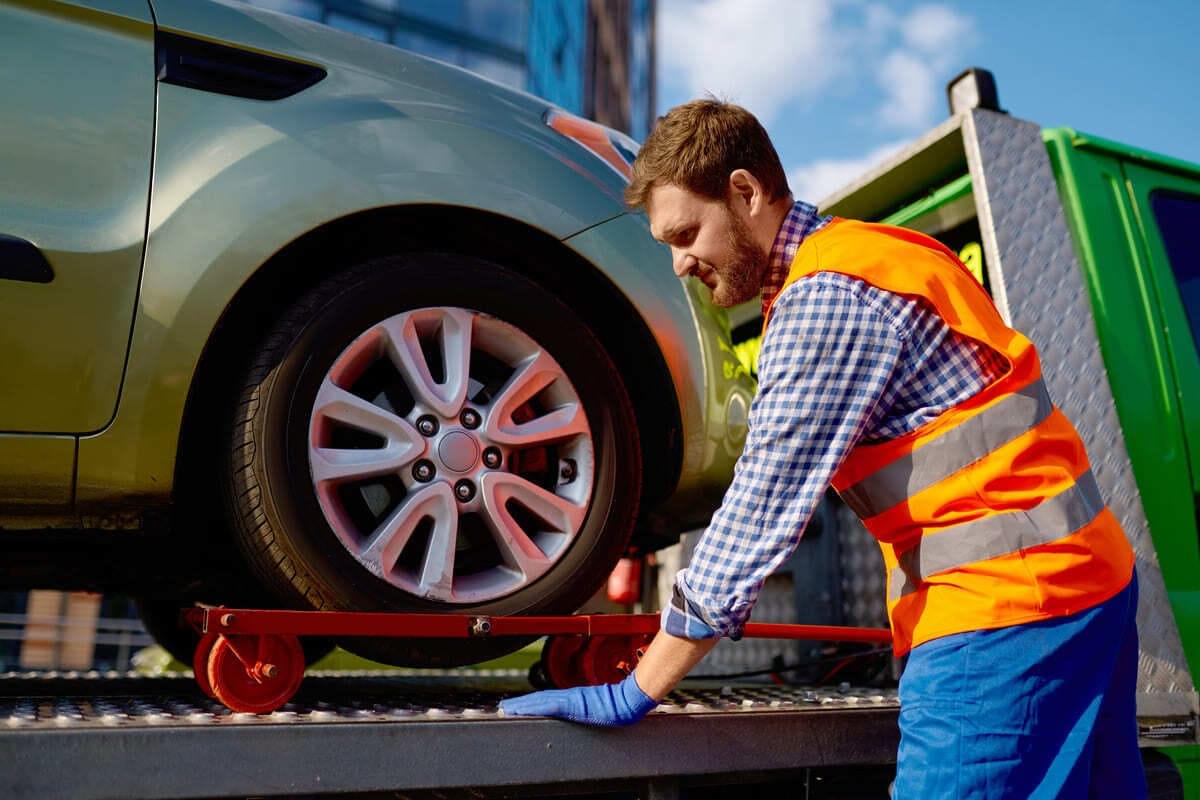
When you call FreeTowNow after a freeway accident, we dispatch a flatbed tow truck to your location. Our average response time across the San Fernando Valley is 20 minutes. We load your vehicle and transport it directly to a certified body shop in our partner network, not to a storage lot.
There is no tow fee, no storage fee, no gate fee, and no second tow needed. The body shop covers the towing cost because they receive the repair job. Your insurance handles the repair bill through normal channels. You pay zero for the tow itself.
This is the opposite of the CHP rotation tow experience. Instead of your car sitting on a lot accumulating daily fees, it arrives at a shop ready for an estimate and repairs. Call us at the scene before CHP calls their rotation: free accident towing is available 24/7.
Freeway-specific tips
I-5 through the Newhall Pass
The I-5 through the Newhall Pass between Santa Clarita and the San Fernando Valley is one of the most accident-prone stretches in the region. Steep grades, sharp curves, and heavy truck traffic create a dangerous mix. Accidents here often involve multiple vehicles. If you are in a collision on this stretch, pull off at the Calgrove, Lyons Avenue, or Newhall Avenue exits if you can reach one safely. Our trucks serving the I-5 corridor stage from both the Santa Clarita and Sun Valley sides of the pass for faster response.
I-405 through the Sepulveda Pass
The I-405 through the Sepulveda Pass is congested during nearly every daylight hour. Rear-end collisions are extremely common in the stop-and-go traffic between the US-101 interchange and the Getty Center. The narrow shoulders on the pass make it difficult to get out of traffic flow after an accident. Use the Mulholland Drive or Skirball Center Drive exits as safe stopping points when possible.
CA-118 at night
The CA-118 (Ronald Reagan Freeway) between Chatsworth and Simi Valley is poorly lit in several sections. Nighttime accidents on this stretch are particularly hazardous because visibility drops sharply. Keep your hazard lights on and stay inside your vehicle until help arrives. If you are near the Porter Ranch or Chatsworth exits, those provide safer locations to wait. Our tow trucks carry full scene lighting for nighttime freeway pickups.
US-101 through the Valley
The US-101 (Ventura Freeway) runs the full width of the San Fernando Valley, from the Cahuenga Pass through Studio City, Sherman Oaks, Encino, Tarzana, and Woodland Hills. Rush hour accidents are a daily occurrence. For accidents between Van Nuys Boulevard and Topanga Canyon, use the surface street exits to get to a safe location if possible.
CA-170 and CA-134
The CA-170 (Hollywood Freeway) connects North Hollywood to the US-101, while the CA-134 (Ventura Freeway) runs through Burbank and Glendale. Both freeways have tight interchanges where merging traffic causes frequent sideswipe collisions. If you are hit during a merge, pull onto the shoulder and call immediately rather than trying to chase down the other driver.
Your rights at the scene
Remember: you have the right to choose your own tow company in California. You have the right to refuse a CHP rotation tow if your vehicle is not blocking active lanes. You have the right to have your vehicle taken to the shop of your choice, not the tow company preferred lot. Exercise these rights by calling FreeTowNow the moment an accident happens on any San Fernando Valley freeway. We will handle the rest.